Wednesday, May 3, 2017

Was Acts 2 the first Altar Call?

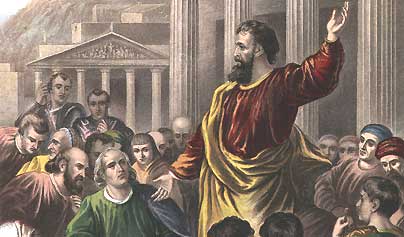
Peter's Sermon in Acts 2


In my discussion on Altar Calls, I had some interaction with a brother on Facebook who disagreed with my take. He said this:


"I fail to see how an altar call is in itself substantially different than what happened at Pentecost."

Well, then. Was Acts 2 an Altar Call? I don't think one can really build such a case. Here are some very important differences:

1. No one was told to come forward in Acts -

They weren't invited up front. They weren't asked to close their eyes and lift their hands. They were commanded to repent and believe the gospel. 

2. No music was played

Often music is employed as a way of setting the 'mood'. There was not 'invitation hymn' in Acts 2.

3. v.37 - The Holy Spirit moved upon the hearers, not Peter's manipulation

The hearers are actually the ones who initiate the response to the sermon, not Peter! They cry out "What must we do!?" I'm telling you, that would be simultaneously startling and amazing if someone stood up during a sermon I preached and cried out "What must I do to be saved!?"

4. No one was told to pray a prayer or led in a prayer or to recite a prayer -

This is the end game of altar calls. Get the sinner to recite a prayer and then tell them that if they really meant it, they are saved. That's not anywhere close to Acts 2 methodology. Peter commands his hearers to repent and believe the gospel. 

Furthermore, he testifies to God's prerogative and sovereignty in salvation saying that "promise is for you and for your children and for all who are far off, everyone whom the Lord our God calls to himself.

5. The gospel was preached, they were told what to do, and it was left to them and God what would happen

Peter simultaneously calls the hearers to repent while letting them know that God must be calling them. Again, as I said in a previous post, we can't close the deal. That's the Lord's work in the sinner.

6. There was no concept of 'this prayer is the beginning of a relationship with God'  

That's problematic theologically on a few levels. We have to see that the initiating work of salvation is not our response but what God has already done in Christ and His application of that in real time by the Holy Spirit when He draws us. The point here being that one's calling on Christ is not what prompts God to begin a saving relationship. 

7. Because of the culture we've been raised in, I think we actually see people in Acts 2 "coming forward". 

I've heard men preach on Acts 2 who actually seem to think that's how it went down. This is a misunderstanding of not only the situation of Peter's preaching but also the point of the text as well.


The point being in all of this that Acts 2 is most assuredly not a proof text for altar calls. However, it is an amazingly beautiful encouragement of the power of God in the gospel and His willingness to save sinners! So, let us rest in that. Let's proclaim the gospel from the rooftops and compel all men without distinction to come to Christ in repentance and faith. Let us extol the mercies of God in Christ and share them the glories of the gospel and the reality of the wrath that remains upon them if they refuse to bow the knee to King Jesus. Trust in the work of God in the hearts of sinners, not in our ability to extend an Altar Call.

Keep laboring brothers. 


A few thoughts on the Sinner's Prayer

Woman in Black and White Stripe T Shirt With a Book on Her Lap Sitting on Sand during Daytime


I had quite a few readers of yesterday's blog (for me anyway, which isn't too many actually!), and so I wanted to follow up a little bit today.

Many people have recited a 'sinner's prayer' in their life as part of their conversion experience. If someone has said the sinner's prayer it doesn't mean they are or are not a Christian, it's just the reality of the culture we live in that many people have probably said the prayer sometime before in their life.

I just want to say a few things about that prayer in today's post:

1. It's nowhere in the bible -

Not in one place in Scripture does the 'sinner's prayer' appear. When anyone wants to become a Christian in Scripture they are never told to recite a canned prayer.

2. It is an evangelical 'sacrament' -

We rightly reject Roman Catholicism's system of justification by faith and works. And yet, we often use the sinner's prayer as a means of making God save us.

3. It stems from a desire to 'close the deal' - 

We all want to see results. I get that. There is no greater joy besides our own salvation than seeing someone else come to Christ! What a blessing! But we can't close the deal. We have to let the Spirit work and the sinner truly understand.

4. It is a misunderstanding of conversion -

Sinners are saved by grace through faith. No one is saved without repentance from sin and faith in Christ. A sinner's prayer should be the expression of that faith to Christ for what he or she already believes. In other words, you don't conjure up faith via prayer. Instead, the sinner calling on God for salvation should express what he or she wants.

Yeah, but what if they can't express it? Then maybe they don't understand it.

When counseling with people I've let them voice a prayer to God and sometimes they've prayed for their sick grandmother and thanked God for blessings. But there was nothing about repentance, needing Christ, or anything like that! So, it's clear they didn't understand the gospel. If I would have led them in prayer they would have repeated after me and thought they were saved when in reality they had no clue what was going on!

So, let's stop leading people in a repeat after me prayer to come to Christ. Instead, let's share the gospel and call them to repentance and faith. If we feel they understand the message then it's perfectly fine to suggest some things they might pray, but don't have them repeat after you. (But I will also say this: It can also be best to clearly explain the gospel, call them to repentance and faith, and then let people alone with God).

And, don't convince them that 'because they prayed that prayer' they are now a Christian no matter what. No. If they never exhibit the fruit of faith, they are not a believer. What needs to take place for a person to be a Christian is to be born again. Sadly, many have said the sinner's prayer but have never been regenerated by the Holy Spirit.

What if you've said that prayer? I've probably said the prayer about 1,000 times growing up! But what we need to understand is that it's not the prayer that saves. It's faith in Christ. If you are holding on to a prayer even though your life is not in pursuit of Christ, you need to repent and believe the gospel. It's not whether or not you said the prayer 'sincerely' but whether or not you trust Christ as your only suitable and all-sufficient Savior.


Hope this is helpful. To God be the glory.

Tuesday, May 2, 2017

The Alter Call: The Key to Removing a Major Hindrance to Missions and Evangelism

arrow, communication, direction

Last summer I moved my family back to our hometown. This is the place both my wife and I grew up, came to Christ, and graduated high school. It has been a real joy serving this community, rekindling old friendships, making new ones, and seeing the Lord work. I am humbled even as I write this!

Over 10 years ago I had served in this area as a Youth Pastor. I was much younger in the faith obviously and one of the mistakes I made during that time was believing that I could bring people to Christ through means of an altar call and sinner's prayer. I reaped some of this fruit last fall when I met with a young man who had been in my youth group over a decade ago and invited him to the church I pastor. His response was something along the line of "I know I'm ok with the Lord. I remember when you saved me when I was in your youth group." Talk about a punch in the gut.

By God's grace, over the last 6 months or so we have seen 5 conversions. Thankfully, one of those was the young man to which I referred to above. But his testimony is not unique. Out of the 5 conversions we've seen, all 5 have been in a place at one point or another where they thought they had been converted because of some sort of altar call, whether at a church service, or a youth retreat, or one even at a VBS.

By 'altar call' I mean a call issued by a pastor or evangelist for people to 'come up front' to receive Jesus as their personal Lord and Savior. Something along the lines of "If you want to be saved come up and pray this prayer" or "If you'd like to be saved repeat this prayer after me" issued to the congregation at large.

From my observation, this practice has been a major hindrance to Missions and Evangelism in our churches. It seems like for the last 20 years or more the Southern Baptist Convention (my denomination) has been fighting over this. And every year I hear a sermon or two from leaders in our denomination about how doing away with altar calls will stifle our evangelistic impact. But I think quite the opposite! And I think the Bible, history, and the current fruit of the altar call system backs me up. Therefore, I contend we must alter the call. We must return to the true public invitations that we see in Scripture. We must publicly invite sinners to repent and believe this gospel! We see this type of preaching by Jesus and His Apostles throughout the New Testament. Furthermore, we see this carried out by faithful men throughout the history of the church.

But what we do not see in the Bible or in the history of the church until the 19th century are invitations to have people come up and repeat a prayer.

Why is the practice of having people come forward to recite a prayer such a hindrance to evangelism and missions?

1. It confuses repentance -

At a church I served in 2011 there were some people who equated 'repentance' with voicing sorrow for sin. Now, surely repentance entails sorrow for sin! But that is most certainly not all repentance is. When we think repentance is merely 'going forward' or 'saying sorry' then this causes a misunderstanding of the essential call of the gospel: To repent and believe (Mark 1:15).

Isn't this at least one reason we see so many 'rededications' at evangelistic events? People feel compelled to 'rededicate' their lives because their initial 'act' of repentance didn't stick.

2. It conveys false assurance -

My friend who recently came to Christ, and the other 4 we've seen do so recently, all lived in a state whereby they thought they were right with God. If they had died in such a state they would have stood before King Jesus who would have said "Depart from me, I never knew you" (Mt. 7:21-23). It is tragic how many are deceived because they have walked an aisle and prayed a prayer! Some of those people are off living for the world and in heinous sin. Others though are right there in the pew every Sunday, and when they hear a call to repent and believe the gospel they think "I've done did that. I'm ok," not knowing that if nothing changes, they will spend an eternity in Hell.

I do not mean to suggest that if you did this that you are 'lost'. That might be true, but it's not necessarily true! But I do say this: If you came forward and prayed a prayer, that's not what saved you, It was your repentance and faith initiated by the grace of God through the work of the Holy Spirit.

3. It ruins church membership -

Many churches in the SBC have wildly inflammatory membership rolls. Say something like 500 on the rolls with 150 present on a Sunday morning. This ratio fluctuates depending on the size of the church but in my estimation, it is generally 3:1 of roll to attendance. This is something that we need to labor to change. I hope for an SBC president one day to lead in this. But that's not something we can wait around on. Pastors must get this conviction and seek to be faithful to the Church's Head in having a regenerate church membership that actually attends.

There is nothing more stifling to evangelism and missions than unhealthy churches. And when we don't practice regenerate church membership rightly, we see unhealthy churches. I mean, surely we can see the negative practical ramifications of lost people serving in our churches?

4. It stifles personal evangelism -

The idea is to 'get someone saved' I just need to bring them to church and get them to walk the aisle. Hey, I'll even walk down the aisle with you if you'll go! I'm sure many Pastors would not support such an idea but it is certainly at least implicitly communicated by the crescendo of the altar call at the end of the service.


There is more that could be said but suffice it to say that the result of an Altar Call atmosphere has created a culture that has actually hindered missions and evangelism. When churches struggle because of unconverted members, or we have unconverted teachers, pastors, or missionaries on the field, or we are proclaiming a confused or truncated gospel, then surely we can see that these things not only aren't advancing the cause of Christ, but actually being a hindrance to it. When everyone in the Bible Belt is 'already saved' because of the Altar Call, but there is little true love for Christ, little holiness, paltry concern for God's glory, no hatred of sin, then we must face the grim reality that the numbers of people who 'came forward' so boasted about at the evangelism rally (or youth camp, or VBS, etc) 50 years ago, and then again 30 years ago, and then again 10 years ago, and then again last year, didn't actually hold true.

So where do we go from here? My suggestion is the alter call. Instead of calling sinners to come forward and say a prayer, let us call them to repent and close with Christ. But, actually when we think of it in terms of Scriptural evidence and historical precedent, the reality is that the 'Altar Call' is the alter call! The call of repentance and faith has always been the true call of response after gospel proclamation. I'm not the one advocating anything new, but going back to the Book.

What will this look like? Here are a few thoughts:

1. Be Clear on What Sinners Must Do -

I've heard the argument that the Altar Call is really just about helping people understand what they must do to be saved. I've heard pastors say that they invite people forward and to repeat a prayer so that they can know what they are doing. Why can this not be communicated in the sermon? Was Jesus not clear in Mark 1:15? Was Paul not clear in Acts 16:31?

Is prayer involved in our salvation? Of course! We must call on the Lord to be saved. But if we need someone to articulate for us what that means via a prayer to be repeated, have we really understood the gospel? The best illustration I've heard is this: Suppose a man wants to repent to his wife for sinning against her. His idea is to call the preacher and have him come over. The preacher says "Ok son, just repeat after me" "Dear honey" "Dear honey" "I'm really sorry" "I'm really sorry".... So, surely you can see how that definitely is NOT going to be seen as true repentance from the wife!

And in fact, I think the 'sinner's prayer' actually adds requirements. Remember the publican? He simply said 'be merciful to me a sinner.' The heart that is pricked by the Spirit will express itself well enough. In fact, it's God who knows the heart isn't it?

2. Make Counseling a Priority -

Great men of the past have set aside significant time to counsel with people about their salvation. Instead of trying to squeeze in a conversation about the gospel during a 5 minute time of invitation, invite people to talk with you at a later time. During counseling, we can see whether or not there is a clear head knowledge and heart knowledge of the gospel.

3. Trust the Lord's Work and Timing -

God saves sinners. There is nothing you or I can do to move them across the threshold so to speak. We can't move them from darkness to light. That's the work of the Holy Spirit. We live in a results based society. We want to see results now. But as Tom Nettles has said, "Conversion is certainly instantaneous, but not all instantaneous response is true conversion; sometimes the evidence of true conversion is slow (Luke 8:11-15)." Not every immediate responder to the gospel is converted. Instead of laboring for results, let us labor to make the gospel clear and to show clearly what it means to repent, trust Chist as Savior, and follow Him as Lord.

4. It's Ok to Sing a Hymn at the End of the Sermon -

We sing a hymn at the conclusion of our sermons. We even have an opportunity for people to pray with the pastor or publicly unite with the church (after previous counsel of course!). I'm not saying preach the sermon and walk out the doors. Singing a hymn can give people sufficient time to reflect on what's been said. They can praise God! They can pray to God! But don't make this the crescendo of your service whereby you play 17 verses of Just As I Am and plead with people to come forward. Let the pleading to close with Christ happen in the public proclamation of the Word. There doesn't need to be an 'after sermon' after the sermon. One is sufficient.

5. Remember that Sunday Mornings Aren't Primarily Evangelistic -

The church is made up of Believers. The primary exhortations during the sermon should be directed to the church. Yes, call unbelievers to repentance. But the whole sermon shouldn't be geared toward the lost, at least not in the vast majority of the 52 Sundays every year. The beautiful thing about preaching the gospel though is that Christians need it to. So, the exhortation to Believers to continue to trust the gospel, and repent of sin, and rest themselves in the finished work of Jesus is also a call to unbelievers that they need to do the same thing.

When we understand the truth that Sunday mornings are for the church, this will greatly aid us in a right view of what we should be doing and not doing in our services. We don't tailor services for the lost! Rather, we submit to Scripture's authority and trust its sufficiency for how we do Sundays. Evangelism is taking the gospel to the streets. We must equip our people to share the gospel in the home, at their work, with their neighbors. And their goal isn't just to get people in their life to 'come to church' but to repent of their sin and trust Jesus alone as their only suitable and all sufficient Savior.

6. Trust God's Grace for Past Failures -

As I said above, I failed in this before too. I shudder when I think about some of the people I led in a Sinner's Prayer who are not in church and by all evidences afforded to me, not true Beleivers. But there is grace for this too. I'm not saying it's not a serious error! I'm just saying the Savior's blood speaks a better word. So, if you've failed in this, trust God's grace, repent, and change.

7. Understand the Difficulty of Change -

I have had personal experience of trying to teach on this where it was rejected. So, commit this issue to prayer. Be willing to talk with people. Be humble. Be patient. But be serious in your conviction to please the Lord. Love the church and lost people enough that you are willing to adapt your methods to line up with Scripture. But also realize that change is difficult. Especially something that has been engrained in our culture for so long.

I've never shared this publicly before but while I was serving at a previous church, I actually had a denominational leader tell a pastor friend of mine that I had 'stopped doing invitations'. This was not true! But it was something a church member had communicated to this person and so this person communicated it to someone else and it got back to me. As an aside, I sure could have used the help instead of the gossip! The point is, you need to understand change in this area won't be easy. But it's ok. It's worth it!


This has been on my heart for a number of years now. But there is something about seeing the bad fruit of Altar Calls personally time and again over the last several months that has prompted me to write this post. I truly believe that if we want to see the work of God furthered and not hindered in our area and across the globe, we must eschew the foolhardy methods of Altar Calls and Repeat After Me Prayers for salvation.


Monday, May 1, 2017

Peter's Unwasted Life


We recently began a new series through the 1st Epistle of Peter. Expository sermons through books of the Bible is the mainstay of our preaching (Why?) at Perryville Second Baptist.

This is from our introductory sermon on the Epistle.

This letter was written by the Apostle Peter probably in the 60s AD. So Peter is older in life and it has been nearly 3 decades since the death, burial, crucifixion, and ascension of Jesus. Peter is someone we have a lot to learn from. But even more importantly, we know that as he pens this letter that the Holy Spirit has worked in and through Him in such a way that we don’t merely have Peter’s words but God’s. However, it is still helpful for us to understand the human author. And so today, I want us to see 8 things about Peter’s life and hope to show you that even though he died a gruesome death, his life was not wasted. Chiefly for one reason: He loved and lived for Jesus!
But, we’ve got to start from the beginning. So, point 1:

I.                    Peter the Person – Who was the Apostle Peter?

He was born as ‘Simon’ in the city of Bethsaida in Galilee. Bethsaida sits on the northern shore of the Sea of Galilee, and so it’s not hard to imagine that he became a fisherman. That was the family business. Simon the fisherman was first introduced to Jesus by his brother:
One of the two who heard John speak and followed Jesus was Andrew, Simon Peter’s brother. He first found his own brother Simon and said to him, “We have found the Messiah” (which means Christ). 42 He brought him to Jesus. Jesus looked at him and said, “You are Simon the son of John. You shall be called Cephas” (which means Peter). (John 1:40-42)

Here is a fitting illustration of how when you meet Jesus, you get a new identity, don’t you? Jesus changed Simon's name. Sort of how Peter says:

But you are a chosen race, a royal priesthood, a holy nation, a people for his own possession, that you may proclaim the excellencies of him who called you out of darkness into his marvelous light. Once you were not a people, but now you are God’s people; once you had not received mercy, but now you have received mercy. (1 Pt. 2:9-10)

I don’t mean to suggest that Peter was ‘saved’ at his first encounter with Jesus but just that immediately when he met Jesus, Jesus changed his name. When we meet Jesus he doesn’t just change our name, but everything about us.

II.                  Peter the Professor –

Now, Andrew was a disciple of John the Baptist. After this first meeting w/ Jesus some time elapsed until Jesus saw Andrew and Peter again and officially called them to follow Him:

While walking by the Sea of Galilee, he saw two brothers, Simon (who is called Peter) and Andrew his brother, casting a net into the sea, for they were fishermen. And he said to them, “Follow me, and I will make you fishers of men.” Immediately they left their nets and followed him. (Mt. 4:19-20)

And Peter wasn’t just a measly fisherman. There’s evidence that he was doing well. James and John were partners with him:

But when Simon Peter saw it, he fell down at Jesus’ knees, saying, “Depart from me, for I am a sinful man, O Lord.” For he and all who were with him were astonished at the catch of fish that they had taken, and so also were James and John, sons of Zebedee, who were partners with Simon. And Jesus said to Simon, “Do not be afraid; from now on you will be catching men.” And when they had brought their boats to land, they left everything and followed him. (Luke 5:8-11)

Peter left everything and followed Jesus. Furthermore, we can be even surer that as he pens this epistle that he understands even greater the radical call of following Jesus and that the only way to not waste your life, is to give up everything and follow Christ! How fitting that we see in Peter that when he met Jesus not only did he get a new name, but also a new profession – from fisherman to fisher of men.

You probably remember that Peter’s personality was such that he became sort of the unofficial spokesperson for the disciples a lot didn’t he? He wasn’t always right mind you. But sometimes he was:

Now when Jesus came into the district of Caesarea Philippi, he asked his disciples, “Who do people say that the Son of Man is?” And they said, “Some say John the Baptist, others say Elijah, and others Jeremiah or one of the prophets.” He said to them, “But who do you say that I am?” Simon Peter replied, “You are the Christ, the Son of the living God.” And Jesus answered him, “Blessed are you, Simon Bar-Jonah! For flesh and blood has not revealed this to you, but my Father who is in heaven. And I tell you, you are Peter, and on this rock I will build my church, and the gates of hell shall not prevail against it. (Mt. 16:13-18)

Peter, by grace, professed Jesus as God’s Messiah.

III.                Peter the Presumptuous

Peter also had some negative traits, didn’t he? Just a few verses down from Peter being right, we read:

From that time Jesus began to show his disciples that he must go to Jerusalem and suffer many things from the elders and chief priests and scribes, and be killed, and on the third day be raised. And Peter took him aside and began to rebuke him, saying, “Far be it from you, Lord! This shall never happen to you.” But he turned and said to Peter, “Get behind me, Satan! You are a hindrance to me. For you are not setting your mind on the things of God, but on the things of man.” (Matthew 16:21-23)

(Just as an aside, it’s never a good thing to rebuke Jesus.)

Peter had some pride issues and if he’d gone to the doctor he’d have been diagnosed with foot in mouth disease. Two other examples:

And Peter answered him, “Lord, if it is you, command me to come to you on the water.” He said, “Come.” So Peter got out of the boat and walked on the water and came to Jesus. 30 But when he saw the wind, he was afraid, and beginning to sink he cried out, “Lord, save me.” Jesus immediately reached out his hand and took hold of him, saying to him, “O you of little faith, why did you doubt?” (Matthew 14:28-31)


And after six days Jesus took with him Peter and James, and John his brother, and led them up a high mountain by themselves. And he was transfigured before them, and his face shone like the sun, and his clothes became white as light. And behold, there appeared to them Moses and Elijah, talking with him. And Peter said to Jesus, “Lord, it is good that we are here. If you wish, I will make three tents here, one for you and one for Moses and one for Elijah.” He was still speaking when, behold, a bright cloud overshadowed them, and a voice from the cloud said, “This is my beloved Son, with whom I am well pleased; listen to him.” When the disciples heard this, they fell on their faces and were terrified. 7 But Jesus came and touched them, saying, “Rise, and have no fear.” And when they lifted up their eyes, they saw no one but Jesus only. (Matthew 17:1-8)

Along with James and John, Peter was in Jesus’ ‘inner 3’. He would later be used mightily of God, but that didn’t happen overnight did it? His presumption and pride got him into a lot of trouble. That leads us to our next point:

IV.                Peter the Pretender

Peter says he writes about the ‘true grace of God’ (1 Peter 5:12). The best people to explain grace, are those who’ve experienced it. Let’s take a look at the darkest time in Peter’s life:

“Simon, Simon, behold, Satan demanded to have you, that he might sift you like wheat, but I have prayed for you that your faith may not fail. And when you have turned again, strengthen your brothers.” Peter said to him, “Lord, I am ready to go with you both to prison and to death.” Jesus said, “I tell you, Peter, the rooster will not crow this day, until you deny three times that you know me.”…Then they seized him and led him away, bringing him into the high priest’s house, and Peter was following at a distance. And when they had kindled a fire in the middle of the courtyard and sat down together, Peter sat down among them. Then a servant girl, seeing him as he sat in the light and looking closely at him, said, “This man also was with him.” But he denied it, saying, “Woman, I do not know him.” And a little later someone else saw him and said, “You also are one of them.” But Peter said, “Man, I am not.” And after an interval of about an hour still another insisted, saying, “Certainly this man also was with him, for he too is a Galilean.” But Peter said, “Man, I do not know what you are talking about.” And immediately, while he was still speaking, the rooster crowed. And the Lord turned and looked at Peter. And Peter remembered the saying of the Lord, how he had said to him, “Before the rooster crows today, you will deny me three times.” And he went out and wept bitterly. (Luke 22:31-34, 54-62)

I think a lot of people miss a point in the gospel stories. And that point is this: Both Judas and Peter denied Jesus in His most crucial hour. And yet, Judas killed himself, but Peter was brought back. But think of Peter! A pretender! A hypocrite! A coward! He talked a big talk but cowered at the interrogation of a servant girl! So why is Peter prayed for by Jesus and later restored? Grace.

V.                  Peter the Pardoned –

Consider what the gospel of Mark tells us after the resurrection of Jesus:

And he said to them, “Do not be alarmed. You seek Jesus of Nazareth, who was crucified. He has risen; he is not here. See the place where they laid him. But go, tell his disciples and Peter that he is going before you to Galilee. There you will see him, just as he told you.” (Mark 16:6-7)

Now we are getting glimpses of grace. Why do you think Peter was singled out here? Tell the disciples AND peter…? Peter had absolutely blown it. He had denied Jesus. He had deserted Jesus. He had turned His back on the One whom he’d said he’d die for. Peter needed to understand grace.
Grace isn’t necessarily ‘easy’ is it? Grace probed Peter’s heart. In John 19 Jesus got at the root of Peter’s pride and denial so that Peter could understand that he was forgiven and that his commission was to love Christ above all else, to follow Christ above all else, and to teach Christ’s people.
Peter deserved to die abandoned and alone just like Judas. But instead Jesus sought Him, and dealt with Him in love and grace showing that the blood of Christ was enough to cleanse Peter of his sin.

VI.                Peter the Proclaimer –

In 1 Peter 1:1, Peter identifies himself as an Apostle of Christ. Spurgeon says of this text “It must have been very pleasant to his heart to write those words. Not “Peter, who denied his Master”; not “Peter, full of imperfections and infirmities, the impetuous and changeable one of the twelve.” “Peter, an apostle of Jesus Christ,” as truly sent of God as any of the other apostles, and with as much of the Spirit of his Master resting upon him.”

Now Peter’s life is forever changed. He’s not perfect mind you. But he is changed. Consider his boldness in Acts! (See for example - Acts 2:22-24, Acts 4:4-13 Acts 5:27-31) From Simon the fisherman, to the unrefined prideful disciple of Jesus, to the unfaithful and disloyal traitor, to a bold proclaimer of the gospel!

This is the power of God and the effect of the grace of the gospel! Peter passionately preached that there is salvation in no one else but Jesus! Right in the face of those who he’d once feared. Jesus was right: Peter was a ROCK. And on this ROCK – the truth of Christ’s ministry, and the confession of it by Peter and others - Jesus builds His church. Peter unashamedly proclaimed the forgiveness of sins through the substitutionary work of Jesus Christ on the cross. We see it in this letter too:
He himself bore our sins in his body on the tree, that we might die to sin and live to righteousness. By his wounds you have been healed. (1 Pt. 2:24)

VII.              Peter the Pastor –

Peter says he is a fellow ‘elder’ (1 Peter 5:1). This is synonymous with the term ‘pastor.’ The reason I bring up that Peter was a pastor is b/c this letter is extremely pastoral. There are 3 major themes found in 1 Peter. He wants his readers (who are members of mainly gentile churches scattered throughout modern day Turkey) to:

1.       Understand the Glorious Gospel of Grace and its implications – 1 Pt. 3:18
2.       Live Holy Lives – 1 Pt. 1:14-16
3.       Know the Reality of and Hope in Suffering while living as strangers in this world – 1 Pt. 4:12
The letter of 1 Peter is extremely pastoral, practical, and a needed word for us in 2017. It is worthy of your reading it and rereading it. Jesus’ life, death, and resurrection produces a holy people. And our hope isn’t in this life or the fame or fortune or accolades we can receive from it (1 Peter 1:3-5)/
Peter is a man in love with Jesus and in love with the church and this pours out of every page of this letter…

VIII.            Peter the Persecuted -

The Bible tells us that Peter would die a martyr (John 21:18-19). But it doesn’t tell us exactly how he did end up dying. Tradition however, says he died in Rome at the hands of Emperor Nero sometime in the mid to late 60s after he had written 1-2 Peter.Tradition also says that he was to be crucified but did not consider himself worthy to be crucified like Jesus so he requested to be crucified upside down.

I bring up Peter’s death for two reasons:

1.       When Peter writes about suffering, he wasn’t just saying ‘do as I say’

He was writing with conviction and calling the church to be faithful in suffering and his own death proves that he was living that out too. Read Acts and see Peter’s suffering. He was beaten and imprisoned because of his love for Christ. Peter understood suffering.

2.       He did not waste his life

See, you might be reading this today and think that any person who gave up their family business, and some even close relationships with friends and family, in order to be beaten, ridiculed, persecuted, and eventually martyred for their faith in Christ, would be a wasted life. Oh, but I assure you today, Peter did not waste his life. And you might think “Well, I wish I could ask him” but we already KNOW what he thought because we have his letter! His life was oriented to proclaiming the excellences of the person and work of Jesus! (1 Pt 2:9)

Peter lived an unwasted life b/c he followed Jesus:

·         He didn’t live for this world but the one that is to come at Jesus’ return
·         His hope was so set on what Jesus had done, was doing, and has still yet to do, that he resolved to live holy in the midst of a twisted culture
·         He was willing to love, and to share the hope of Jesus with others.
·         And he was willing to suffer for his faith to the glory of God.

It has been my endeavor to set before us the man who wrote this letter so that we might understand the background of his writing. But, even more importantly, I hope that we have seen the Man whom Peter would want to be set before us: Namely, the God-Man Jesus Christ. A life that loves, submits to, follows, and obeys King Jesus is never a wasted life. Whether we are known in 100 years by this world or not.

Who cares? Jesus knows us! Jesus knows me, this I love!

·         Jesus became a curse that I might receive the blessing.
·         Jesus tasted death that I might have life.
·         Jesus was forsaken that I might never be abandoned.
·         Justice was paid on the cross that I might receive grace.

And by faith in this gospel, we go free. Free to live in holiness. Free to live in joy and delight in Christ. Free to suffer in hope. Free to eagerly await the return of our Lord and Savior Jesus Christ. Free to grow until he returns (2 Peter 3:18).

I implore you today: Do not live a wasted life. Do not buy into cultural expectations for what matters.

Christian: See Jesus as infinitely better than any worldly achievement or the applause of men. See your life, and your children’s lives, as more valuable than the paltry goals the world has for you. Live for Christ! Rest in His finished work daily and let the world know who you really are by your holy lives and by the spoken gospel.

Unbeliever: Do not waste your life. Oh you may think the cost is too great. But I assure you: The cost of a wasted life is much greater. Surrender now to Jesus as your only suitable and all-sufficient Savior. Can you receive pardon? Oh yes! Yes you can! Just ask Peter! But you must come to Christ in faith alone…


Don’t waste your life.
(You can hear this sermon preached by clicking here)

Thursday, April 27, 2017

Keep Moving Forward


car, driver, exhausted

As we journey through the 1st Epistle of Peter together at Perryville Second Baptist, it is evident to me that one of the themes of the letter is that Believers are to be holy. As a Minister of the gospel, I have alway sought to try and carefully balance the exhortation to pursue holiness while understanding that we won't attain perfection in this life.

Recently, thanks to a free gift from Ligonier, I acquired John Calvin's A Little Book on the Christian Life. I think what Calvin writes about this in the first chapter is superb. I hope you are encouraged and challenged:

"I'm not saying that the conduct of a Christian will breathe nothing but pure gospel, although this should be desired and pursued. I'm not, in other words talking about gospel perfection, as if I were unwilling to acknowledge or recognize a man or a woman as a Christian who has not obtained perfection. If that were the case, everyone would be excluded from the church, since we do not find any in it who are close to being perfect. Indeed we find many in the church who have progressed little toward perfection, but who, nevertheless, it would be unjust to reject as Christians.  
What I am saying is this: Let us fix our eyes on the goal and sole object of our pursuit. Let that goal, toward which we must strive and contend, be established from the beginning. After all, it's not right to barter with God regarding what we will and won't undertake form those things He has prescribed for us in His Word... 
Of course, none of us is capable of running swiftly on the right course while we remain in the earthly confinement of our bodies. Indeed, most of us are so oppressed with weakness that we make little progress - staggering, limping, and crawling on the ground. But let us move forward according to the measure of our resources and pursue the path we have begun to walk. None of us will move forward with so little success that we will not make some daily progress in the way. 
Therefore let us keep trying so that we might continually make some gains in the way of the Lord, and neither let us despair over how small our success are. For however much our successes fall short of our desire, our efforts aren't in vain when we are farther along today than yesterday. 
So let us fix our eyes on the goal with sincereity and simplicity, aspiring to that end - neither foolishly congratulating ourselves, nor exusing our evil deeds. Let us press on with continual striving toward that goal so that we might surpass ourselves - until we have finally arrived at perfection itself. This, indeed, is what we follow after and pursue all our lives, but we will only possess it when we have escaped the weakkness of the flesh and have been received into His perefect fellowship." (Emphases mine)

Ah! How refreshing! Keep pressing, beloved. Keep fighting.

Keep moving forward.

Though you do not now see Him, you love Him. Press on. One day you will see Him and you will not regret striving for holiness. To Christ be the glory.


Tuesday, April 25, 2017

What does it mean to love God?

art, background, bark


Everyone in the Bible Belt loves God. 

Well, at least most people say they love God. In fact, when teaching and preaching on the reality of depravity it is difficult to communicate to people our relation to God apart from Christ. Most people view our love of God like our love for our 3rd Cousin that we never visit. We don't wish any ill will toward him or her so we say we "love" them. Surely we don't wish any ill will toward God! So, we conclude that we must "love" His as well.

This is problematic for a couple of reasons. First, it's not true. We do wish ill will toward God for we want Him to be like us instead of Who He is. We want Him to love what we love, to be ok with our sin, and to let us live a life unbothered by Him and His holiness. In fact, if it were possible, we would throw off the restraints and cast Him forever into the abyss so that we could rule and reign the universe instead of Him. Secondly, it is problematic because it does not convey the biblical understanding of love. 

So, biblically, what does it mean to love God? For that, we are going to call in a guest writer. Thomas Watson (1620 - 1686). (All words except those in brackets are Watson's) 

"What is love? 

It is a holy fire kindled in the affections, whereby a Christian is carried out strongly after God as the supreme good. The nature of love consists in delighting in an object. This is loving God: to take delight in Him. 'Delight thyself also in the Lord' (Psa 37:4), as a bride delights herself in her jewels. Grace changes a Christian's aims and delights."

"What are the visible signs of our love to God?

1. If we love God, our desire will be after Him. He who loves God breathes after communion with Him. 'My soul thirsteth for the living God.' Psa 42:2. Persons in love desire to be often conferring together. He who loves God desires to be much in His presence."

2. "The second visible sign is, that he who loves God cannot find contentment in any thing without Him. Give a hypocrite who pretends to love God corn and win, and he can be content without God; but a soul fired with love to God, cannot be without Him."

3. "The third visible sing is that he who loves God, hates that which would separate between him and God, and that is sin. Antipathies can never be reconciled; one cannot love health but he must hate poison; so we cannot love God but we must hate sin, which would destroy our communion with Him."

4. "The fourth visible sign is sympathy. Friends that love, grieve for the evils which befall each other. If we have true love in our heart to God, we cannot but grieve for those things that grieve Him. They surely have no love to God who can laugh at that which grieves His Spirit! Does he love his father who can laugh to hear Him reproached?"

5. The fifth visible sign is, that he who loves God, labours to render Him lovely to others. He not only admires God, but speaks in His praises, that he may allure and draw others to be in love with Him. True love to God cannot be silent, it will be eloquent in setting forth His renown. There is no better sign of loving God than to make Him appear lovely, and to draw proselytes [converts] after him."

6. The sixth visible sign is, that he who loves God, weeps bitterly for His absences. What can all worldly comforts do, when once God is absent? 

7. The seventh visible sign is, that he who loves God is willing to do and suffer for Him. He subscribes to God's commands; he submits to His will. If God bids him mortify sin, love his enemies, be crucified to the world, he obeys. It is a vain thing for a man to say he loves God, and slight His commands. If God would have him suffer for Him, he does not dispute, but obeys. It is true that every Christian is not a martyr, but he has a spirit of martyrdom in him; he has a disposition of mind to suffer, if God call him to it. We [only] pretend to love Him [if we] will endure nothing for His sake."


So, the question is, do you love God? Do you love Him? Not do you love Him perfectly, for no man save Christ has done this! But do you love Him at all? And if you love Him at all, then these 7 signs Watson lays out will be evident in your life. And while it is true we don't know anyone's heart or motivations, we can and do see their actions. Yes, we must exercise Christian prudence and grace, but it's not helpful to affirm one's love for God when they manifest little or no evidence that they do actually love Him! Remember, we aren't to let culture dictate to us what 'love' is but Scripture.

Do you love Him?

Consider the gospel. Although we wanted to replace God in hate, He instead, in His great mercy and sovereign grace, replaced us on the cross in love. He substituted His own Son to bear our guilt for all who call to Him in faith. Will you look to Jesus in faith?


Wednesday, February 15, 2017

Why We Must Think of God Rightly


I've never read the Shack. Nor do I have any plans to do so. But it has certainly been causing a stir lately as the movie comes out in just a few weeks. 

Personally, I didn't think there were any serious Shack supporters within the circles that hang out in but I noticed the comment below on Facebook: 

"I have read the [Shack]. I did not think it was blasphemous. I thought it portrayed the Father Son and Holy Spirit in a way that this man could relate to them in his time of pain and definitely not that they would appear  in the same way to anyone else. Just my point of view."

A few issue there but here's the one I'd like to focus on: it's not ok to think of God in any way we want. Whether we are in pain or joy. Sadness or jubilation. It's not ok to portray God in a way that makes Him more 'relatable' to us. 

Why?

Primarily for the reason that He has already revealed Himself to us in the one way we can relate to Him. Our Triune God has set the parameters for which we may think of Him in His Word and has shown us that the way to Him is through the person and work of Christ. This doesn't 'limit' God's 'godness' but rather shows us who He is as He is. For example, Jesus says "God is spirit, and those who worship him must worship in spirit and truth" (John 4:24). It's not ok to worship God in anyway that is not 'truth'. And you or I don't get to define truth. Truth isn't just 'whatever feels true to me today,' rather, truth is objective. Truth is truth and that's the truth. Truth is the Word of God. 

To worship our 'ideas' of what God is like separate from what the Bible actually reveals God to be like is idolatry. Time and again God scolds His people for not thinking of Him rightly (see Psalm 50:21 for example). 

"Yeah but the Shack is fiction." Well, we've already seen how it causes people to give acceptance to 'any view of God goes as long as it works for you.' So, it maybe fiction, but it doesn't take away from its danger in making us think wrongly about God. 

This Sunday we are beginning a new sermon series at our church on God's holiness. It didn't click with me until today just how closely this is connected to the current hubbub over the Shack. You see, God has revealed Himself to us as the Holy One. One eternal God in three co-equal and distinct persons. We didn't make up thinking about God this way. Instead, this is who God is and we know so because He has told us. So, I don't get to define God in such a way that 'works for me.' I don't get to say God's holiness means whatever I'd like it to mean today. I am obligated to define Him the way He defined Himself. Furthermore, I am only hurting my joy in Him when I seek to define Him in ways I think are more convenient for my circumstances. Only the eternal, Triune, holy God of the Bible can grant me life, satisfy my deepest longings, and pardon me of my sin against Him. 

And if at this point you still don't see the big deal, consider what Jesus says the essence of eternal life is: "And this is eternal life, that they know you the only true God, and Jesus Christ whom you have sent" (John 17:3). You don't have eternal life if you don't know God. Yes, this isn't merely intellectually, but also gloriously relationally. However, it's impossible to be in a true relationship with someone you don't also actually know intellectually. Does this mean we must be able to exhaust God before we can have a relationship with Him? Of course not! For you cannot exhaust the inexhaustible! Our knowledge of God now barely scratches the surface of who He is. We will spend an eternity knowing Him and growing in our knowledge of Him. So, let us not think lightly about how we think of God. To consistently and consciously think of God in such a way that is wrong or contrary to Scripture suggests that we do not have eternal life. Again, that's just what the Bible says "this is eternal life, that they know you, the only true God." There aren't many versions of the only true God as if we are ok just because we use the term 'God' and 'Jesus'. No. There is One God and this God must be thought of the way He as told us to think of Him. 

Let Scripture be your plumb line. But let it also be the hammer that smashes faulty thinking into dust. Let it be the chisel that conforms our mind and heart. Let it be the fire that burns obliterates all idols. Let it be the sword that protects us against any false teaching on the character and nature of God. Let it be the anchor that keeps us from drifting away. Let it be the light that shines on all that God is for us in the person and work of Christ. Let it be our treasure in the morning and our solace in the evening. Let us love it, not because it is an end in and of itself. But because it shows is the one true God. In Him and to Him be the glory alone. Amen.