Tuesday, June 27, 2017

Tuesday, May 23, 2017
When Bad Stuff Happens

I've been reading through A Little Book on the Christian Life by John Calvin recently I think he has some excellent words for us to consider. His words below:
We are continually harassed by one illness or another: the plague advances; we are cruelly vexed by the calamities of war; frost and hail render the land barren and leave us with little, devouring our expectation for the year's crop. Wife, parents, children, and close relatives are snatched away by death: homes are consumed by fire. These are events which make men curse their lives, despise the day they were born, hold in contempt heaven and its light, rage against God, and being fluent in blapshmeies, accuse God of unfariness and cruelty.
But the believer must in these same circumstances consider the mercy and the fatherly kindness of God. If the believer, then, should see his house made lonely by the loss of those nearest to him, even then he must not stop praising the Lord. Rather, he must turn himself to this thought: "The Lord's grace continues to dwell in my home and will not leave it desolate." If the believer should see his crop consumed by drought, disease, or frost, or trampled down by hail and famine threaten him, even then he must not despair within his soul, nor should he become angry toward God. Rather, he must persist with confidence in this truth: "But we your people, the sheep of your pasture, will give thanks to you forever" (Ps. 79:13).
God, then, will provide for us, however barren the land. If the believer should be afflicted by illness, he must not be so stung by the severity of his hardship that he erupts in impatience and demands from God an explanation. Rather, he must, considering the justice and gentleness of God's discipline, recall himself to patience.
Indeed, the believer should accept whatever comes with a gentle and thankful heart, because he knows that it is ordained by the Lord. Moreover, he must not stubbornly resist the rule of God into whose power he has placed himself and all his affairs. So let the Christian make it his priority to drive from his breast that foolish and unfortunate comfort of pagans, who, in order to bolster their spirits against all adverse events, credit those events to fortune. They think it's silly to be angry at fortune, since she is reckless, aimless, and blind - inflicting her wounds equally on the deserving and the undesdrving. In contrast, the rule of godliness is to recognize that God's hand is the sole judge and governor of every fortune, and because His hand is not recklessly driven to fury, it distributes to us both good and ill according to His orderly righteousness.
Monday, May 22, 2017
New Fish, New Bait?

I wanted to post a quick response to a blog I read today (here) on Catching a New Kind of Fish.
I'm hesitant on posting because #1, we live in a society where any sort of push back is seen as judgmental. That's not my goal. I don't want to be contentious. I want to help. This isn't a bashing post. It is a desire to help us think through this from all sides. And 2ndly, I'm running short on time this afternoon, so I know this won't be as long as would do it justice.
So, read the first post, and then see the reply below:
Let me start by saying I am thankful for Arkansas Baptist church planters! I am thankful for their zeal for the lost and their desire to see the kingdom of God grow. If you are a church planter, I want to tell you thank you! To the brother who wrote the original post, thank you for your heart of wanting to see sinners come to Christ. Thank you for the time and effort you put into seeing people experience the life-changing encounter with the gospel. This post is not an attack on you. However, there are some things I'd like for all of us to think through from a different perspective.
Let me specifically respond to this paragraph:
So what do we do to get people through the door? Well, to catch a new kind of fish, we need a new kind of bait!I would say New Faith has moved away from a lot of traditions. We don’t have a pulpit where the preachers sit up front on the stage. We don’t ask people to turn around and look at the congregation after they’ve made a decision.On the fourth Sunday of the month, we wear jeans and t-shirts on Sunday morning!What if the new bait is simply the old bait packaged differently?
You see, we've been on a kick the last couple of decades of doing away with 'traditional' and all we've really done is create the same problem on the other side of the pendulum so to speak. Moving away from traditional doesn't actually move away from traditions - it only creates new traditions that someone else will try to 'move away from' in 50 years (or less).
In other words, when we make 'church' about 'traditional' or 'anti-traditional' we have the same problem. The paradigm of ministry is not as much the issue in our day as is the substance. Not to be too cliché here but the answer really is the gospel. The pure, unadulterated, life-changing gospel of Jesus Christ is our only hope. We must put all the effort we can into preaching this gospel to the masses, into helping churches keep their focus on Christ as their greatest joy and treasure, and into showing others what the power of the gospel really can do in the local church.
What I mean is, do we want churches where people say "I go here because they don't have a pulpit"? Or "I go here because they sing heavenly highway hymns"? Or "I go here because they have deer heads on the wall", or "we can wear cowboy boots"? Is not the bait for winning souls to Christ the free and full forgiveness offered in the completed work of Christ? Nay, it's not the bait! It's the true food!
So, it is my plea to have us eschew any attractional methods we are tempted to employ and simply proclaim Christ and Him crucified. May He be the center! May He be the draw!
Brother pastors, and brother church planters, please do not have something other than Christ and your commitment to Him and His Word as the 'draw' for uniting with your local body. I maintain that if we truly want to catch new fish, we have to listen to the chief Fisherman. Let us be less concerned about creating the right 'atmosphere of worship' and more concerned about being faithful to what the Head of the Church would have us do.
I know the brother who wrote the original post deserves a more detailed response, but I've got to sign off for the day. I've written more about this sort of stuff. Here are a few examples below:
10 Reasons to Reconsider the 'Affinity Based' Model of Church Planting
Church for the Unchurched
Unhealthy Evangelism
Another Reason to Go to Church
Why the Way Forward is Backward
Time to Put Baptist Back in Your ChurchTop Ten Reasons Why People Don't Go to Church
Why I Need A Church that Judges Me
Church for the Unchurched
Unhealthy Evangelism
Another Reason to Go to Church
Why the Way Forward is Backward
Time to Put Baptist Back in Your ChurchTop Ten Reasons Why People Don't Go to Church
Why I Need A Church that Judges Me
Monday, May 15, 2017
The Rare Jewel of Biblical Observation

Today's post is from my friend Adam Willett. Adam is a husband and father who loves Christ and has a desire to see the gospel advance in our state (Arkansas) and the nation. I am blessed to call Adam a close friend and I know you will be edified by what he has to say. Read and heed! His words below:
One of the biggest benefits I’ve ever experienced in my Christian life is that of biblical repetition. What I mean is simply reading the Bible over and over again, specifically reading the same passage over and over again. I once heard John MacArthur tell his church of the importance of staying in a specific text and reading it repeatedly. He suggested taking a group of about 5 chapters and reading those everyday for a month. For instance, read the book of Galatians every day for the entire month of May. I was immediately drawn to the idea because of the simplicity of it. I am no biblical scholar and I am certainly no Greek or Hebrew scholar, so I need every help I can get. I started in the book of First John. I read the same five chapters every day for a month. Honestly, I was more engaged with the text that month than I ever had been. The way the Spirit worked through the word was incredible. I continually learned the text and continually found myself asking questions and wanting to know more. There were days when light would shine bright on a text, and I would see things on day 17 that I had not in the previous 16. Repetition helps my weak mind remember and pay attention to the word.
Since I started reading the Bible this way, the Lord has been gracious to reveal more and more of who He is in His word. I’ve since modified how I read the text. Instead of simply reading through a set of chapters daily, now I read through a set of chapters and every day pick one of those chapters to pray through. So, if I were reading through Galatians every day, on Monday I would read all five chapters and then pray chapter 1. On Tuesday I would read all five chapters then pray through chapter 2, and so on. Reading the Bible in this way has been a huge encouragement and has yielded much fruit for me. At one time I would drudge through a passage just trying to get to the end. My goal was quantity and not quality. There is a certain emptiness and despair in reading the Bible that way. It leaves me clinging to self-righteousness – that I had accomplished something by reading the Bible – but left me spiritually wanting more. Reading through the Bible in a year and other ventures of the sort aren’t necessarily bad suggestions, I just believe that repetition is a better, more fruitful way for the Christian who longs to glean from the Holy Scriptures. In fact, I would suggest doing both, but it may take you longer than a year to read the Bible in a year.
This is really not some revolutionary new way to read the Bible. It couldn’t be sold as a new “how to guide.” All it really comes down to is observation. All it really comes down to is spending time in the Word of God and letting the Holy Spirit lead and guide. It is certainly pragmatic. I genuinely believe that a Christian must grow by reading the Bible this way. He has no choice. The Bible is living and active and sharper than any two-edged sword, right?
Again, this is not a Bible study program meant to make us scholars. This is simply reading the text and the Spirit showing us things we may normally glance over. I’ve found as I read through several chapters repeatedly, I notice the context of the passage and how each idea fits together. It’s not that I'm looking for context. I haven’t sat down with medical instruments ready to dissect the text. I am just reading and the context shows itself. After several days, the theme of the author is made apparent. I start to understand why Paul said what he said in Galatians 4 and how it relates to his opening chapter. I start seeing his concerns and how the Holy Spirit moved him to use those specific words. I start noticing the same words used often, that tell me of the authors concern and focus.
One of the most incredible insights I have gained is seeing the love and concern the author has for the readers. I spent a few months reading through the Thessalonians. After several weeks, it became glaringly obvious that Paul had a deep and caring love for the people of Thessalonica. His words were dripping with love. It wasn’t just one verse that I could pinpoint either, it was chapters and the book as a whole that lead to that conclusion. I don’t think I would have ever really understood that without reading it over and over. Such knowledge was and is invaluable to me.
We are not called to be like the teenage pupil in 8am biology class, dozing as the instructor reads through the book. We are called to be paying attention. We are called to see, hear, and obey what is in the text. Read through and notice the imperatives. See how the author focuses on one theme throughout a passage. Don’t just focus on the core verses, like the John 3:16’s, but also read the verses in between. We often scan through passages looking for the verses that would look nice highlighted, but remember that the rest of the text is inspired too. The letters in black are just as inspired and important as those in red. Read both with a thirst for knowing Christ and knowing the God of the Bible.
And I haven’t even mentioned the benefit of praying through the word. That’s for another article but it is imperative we know and believe that the Holy Spirit of God works through his word. He works both by the reading of His word and by praying through it.
Ultimately, if we cherish God's Word, we will want to read it like we would a love letter from our beloved. We would read it over and over and focus on each little word. We would notice how the letters are rounded off a specific way or how they dot their I’s. We would notice the smell and the paper on which it was written. We would fawn over those words like they were more valuable than any precious stone. Well, the scriptures are much more than any love letter and they are more precious that jewels. They tell you of the holy and righteous King of the universe, God Almighty. Dive into those words.
Thursday, May 11, 2017
Mutants and their Immutable God

What follows below is a guest post by Eddie Ragsdale, Pastor of First Baptist Church in Marshall, AR. I've known Eddie only 4 years but he has become a dear friend and brother in Christ. I appreciate his pastoral heart and theological insights. Hope you are blessed today from his writing:
Last evening I was watching a science show about genetic modification. In the course of this show there were several interesting topics being discussed such as bioethics and just how expansive an impact these new technologies might be. However, what seemed to stir my thinking the most was an off handed comment about how that we are all 'mutants' and the very important role the ability to mutate is for us to adapt and survive. Now I would of course take a different view of history and origin issues than those on this program. They would clearly have an evolutionary worldview whereas I would have a biblical young earth creationist worldview. But still the fact that there have been mutations in all of our genomes is clear and observable scientific information.
What seemed to be so intriguing to me is the fact that we are mutable. We change! As a matter of fact we are always changing. You are not the same person you used to be. Have you ever had the experience of reconnecting with an old friend that you haven't communicated with in years? Now I know the sappy stories of people picking up where the left off and bonds lasting even through time and separation blah blah blah. But my personal experience has been that even close friends I once had are almost strangers after years of separation because we have both changed so much. As a matter of fact I think that's healthy. I mean if you can pick right up with someone from twenty years ago with out any problem, what have you been doing for twenty years? Personal growth and life experiences should change us. I'm not even sure if I could relate very well to myself from twenty years ago. The fact is all this change can be both exciting and terrifying.
So what's the point, why am I writing all of this? Well, I was drawn into thinking about this whole subject of our mutability because that word 'mutable' made me also think about the word 'immutable'. Now it would be a tragedy if we were immutable because we need to grow and develop. A child that didn't grow and develop would quickly be found deficient for the next stage of life. The fact is we need to change because we as imperfect beings need to get better; we need to improve. Our current state simply isn't good enough. So immutability would be a bad thing for us.
However, there is One who is immutable! The Bible says that God does not change. "Jesus Christ is the same yesterday and today and forever" (Hebrews 13:8). Now while it would be a bad thing for fallen imperfect beings like us to be immutable, it is an altogether great thing for a holy, righteous and perfect triune God to be immutable. Actually, in a universe filled with so much expansion and change the only reason that we can know anything is because God who has made and continues to hold all things together is unchanging. If our God could change or did change then everything we think we know could change. All of our understanding of matter and science is built on the idea that there are absolute laws that must exist in the universe. These laws depend on God and if He changed then they could change. However, even more important than any of these physical things is the reality that if God changed then we would have no confident hope in His promises. We can trust God's promises and His amazing work of redemption because He does not change! So much more could be discussed here: the immutability of His word or of His will or of His ways. But for the moment let us marvel at His glorious immutability. I might add also let us as sinners take full advantage of our mutability by repenting of our sins and putting our settled trust in the Lord Jesus Christ!
Wednesday, May 3, 2017
Was Acts 2 the first Altar Call?
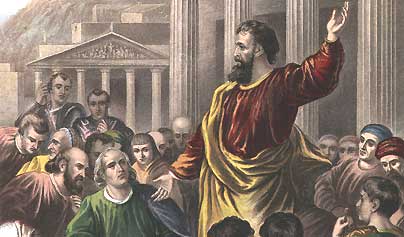
In my discussion on Altar Calls, I had some interaction with a brother on Facebook who disagreed with my take. He said this:
Well, then. Was Acts 2 an Altar Call? I don't think one can really build such a case. Here are some very important differences:
1. No one was told to come forward in Acts -
They weren't invited up front. They weren't asked to close their eyes and lift their hands. They were commanded to repent and believe the gospel.
2. No music was played
Often music is employed as a way of setting the 'mood'. There was not 'invitation hymn' in Acts 2.
3. v.37 - The Holy Spirit moved upon the hearers, not Peter's manipulation
The hearers are actually the ones who initiate the response to the sermon, not Peter! They cry out "What must we do!?" I'm telling you, that would be simultaneously startling and amazing if someone stood up during a sermon I preached and cried out "What must I do to be saved!?"
4. No one was told to pray a prayer or led in a prayer or to recite a prayer -
This is the end game of altar calls. Get the sinner to recite a prayer and then tell them that if they really meant it, they are saved. That's not anywhere close to Acts 2 methodology. Peter commands his hearers to repent and believe the gospel.
Furthermore, he testifies to God's prerogative and sovereignty in salvation saying that "promise is for you and for your children and for all who are far off, everyone whom the Lord our God calls to himself.
5. The gospel was preached, they were told what to do, and it was left to them and God what would happen
Peter simultaneously calls the hearers to repent while letting them know that God must be calling them. Again, as I said in a previous post, we can't close the deal. That's the Lord's work in the sinner.
6. There was no concept of 'this prayer is the beginning of a relationship with God'
That's problematic theologically on a few levels. We have to see that the initiating work of salvation is not our response but what God has already done in Christ and His application of that in real time by the Holy Spirit when He draws us. The point here being that one's calling on Christ is not what prompts God to begin a saving relationship.
7. Because of the culture we've been raised in, I think we actually see people in Acts 2 "coming forward".
I've heard men preach on Acts 2 who actually seem to think that's how it went down. This is a misunderstanding of not only the situation of Peter's preaching but also the point of the text as well.
The point being in all of this that Acts 2 is most assuredly not a proof text for altar calls. However, it is an amazingly beautiful encouragement of the power of God in the gospel and His willingness to save sinners! So, let us rest in that. Let's proclaim the gospel from the rooftops and compel all men without distinction to come to Christ in repentance and faith. Let us extol the mercies of God in Christ and share them the glories of the gospel and the reality of the wrath that remains upon them if they refuse to bow the knee to King Jesus. Trust in the work of God in the hearts of sinners, not in our ability to extend an Altar Call.
Keep laboring brothers.
A few thoughts on the Sinner's Prayer

I had quite a few readers of yesterday's blog (for me anyway, which isn't too many actually!), and so I wanted to follow up a little bit today.
Many people have recited a 'sinner's prayer' in their life as part of their conversion experience. If someone has said the sinner's prayer it doesn't mean they are or are not a Christian, it's just the reality of the culture we live in that many people have probably said the prayer sometime before in their life.
I just want to say a few things about that prayer in today's post:
1. It's nowhere in the bible -
Not in one place in Scripture does the 'sinner's prayer' appear. When anyone wants to become a Christian in Scripture they are never told to recite a canned prayer.
2. It is an evangelical 'sacrament' -
We rightly reject Roman Catholicism's system of justification by faith and works. And yet, we often use the sinner's prayer as a means of making God save us.
3. It stems from a desire to 'close the deal' -
We all want to see results. I get that. There is no greater joy besides our own salvation than seeing someone else come to Christ! What a blessing! But we can't close the deal. We have to let the Spirit work and the sinner truly understand.
4. It is a misunderstanding of conversion -
Sinners are saved by grace through faith. No one is saved without repentance from sin and faith in Christ. A sinner's prayer should be the expression of that faith to Christ for what he or she already believes. In other words, you don't conjure up faith via prayer. Instead, the sinner calling on God for salvation should express what he or she wants.
Yeah, but what if they can't express it? Then maybe they don't understand it.
When counseling with people I've let them voice a prayer to God and sometimes they've prayed for their sick grandmother and thanked God for blessings. But there was nothing about repentance, needing Christ, or anything like that! So, it's clear they didn't understand the gospel. If I would have led them in prayer they would have repeated after me and thought they were saved when in reality they had no clue what was going on!
So, let's stop leading people in a repeat after me prayer to come to Christ. Instead, let's share the gospel and call them to repentance and faith. If we feel they understand the message then it's perfectly fine to suggest some things they might pray, but don't have them repeat after you. (But I will also say this: It can also be best to clearly explain the gospel, call them to repentance and faith, and then let people alone with God).
And, don't convince them that 'because they prayed that prayer' they are now a Christian no matter what. No. If they never exhibit the fruit of faith, they are not a believer. What needs to take place for a person to be a Christian is to be born again. Sadly, many have said the sinner's prayer but have never been regenerated by the Holy Spirit.
What if you've said that prayer? I've probably said the prayer about 1,000 times growing up! But what we need to understand is that it's not the prayer that saves. It's faith in Christ. If you are holding on to a prayer even though your life is not in pursuit of Christ, you need to repent and believe the gospel. It's not whether or not you said the prayer 'sincerely' but whether or not you trust Christ as your only suitable and all-sufficient Savior.
Hope this is helpful. To God be the glory.
Subscribe to:
Posts (Atom)